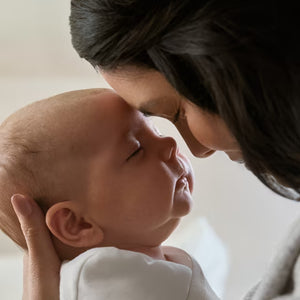



If your baby has plagiocephaly (a flat spot on their head) that needs correction, let’s talk about helping them sleep well with the helmet or DOC band.
Are helmets uncomfortable for babies to sleep in?
Please know that cranial helmets are designed with comfort and sleep in mind since they are supposed to be worn 23 hours per day. It may take your little one a few days to adjust to their new helmet, and sleep may be temporarily impacted. Here are tips to help them adjust:
Make the room temperature comfortable. A slightly cooler body temperature makes sleep easier. However, adding a helmet can actually increase body temperature by acting as insulation, much like a hat on a cool day. Consider dropping the temperature of your little one's room by a few degrees or opting for lighter pajamas or sleep sack to help keep your baby cool and comfortable.
Keep the crib bare. Pillows or other positioners are still considered unsafe for babies in the crib. Even when your baby is wearing a helmet or DOC band for sleep, there’s no need to add any extra padding or accessories.
Give your baby time to adjust. The first few nights and naps, your baby may need a little extra help getting comfortable. Feel free to add extra support in these early days. Once they’ve had a few days to adjust, you can jump right back into your normal sleep routine and habits.
Safety Tip: It may be tempting to put your baby on their tummy to sleep to help them get more comfortable in their helmet, but this is simply not safe. Babies under 12 months should always be placed on their back for sleep. If they can roll to their tummy on their own, it’s okay to let them stay there even if they're wearing a DOC band or helmet.
Can I sleep train my baby with a helmet or DOC band?
Yes, you can sleep train your baby even if they have a helmet or doc band! However, there are a few things that I would like you to take into consideration:
-
Ask your pediatrician first. Always ask your pediatrician before starting a sleep training plan, especially when there is a medical concern.
-
Give your baby time to adjust. Allow some time (think: around 5-7 days) to get comfortable with their new helmet and ensure it's fitting well before beginning a sleep training program. This will help set your family up for success!
-
Consider adjusting clothing layers. A cranial helmet can cause your little one to be warmer than usual when sleeping. To prevent overheating, simply assess the temperature in your baby’s room and consider using a lighter pair of pajamas or sleep bag.
- Use a sleep training plan that looks at your baby as a whole person. My 5–24 Month Collection will do just that: showing you how to customize a plan that prioritizes your baby's unique physical and emotional needs. It's a plan and guidance you can trust to walk you step-by-step to great sleep.