


Have you ever wondered if your baby has “FOMO” (fear of missing out)? Does it feel like your baby having FOMO is disrupting their sleep or making bedtime harder? I’m here to help. Let’s dive into more about FOMO babies, including how FOMO might impact sleep and how to help FOMO babies sleep at home and on the go.
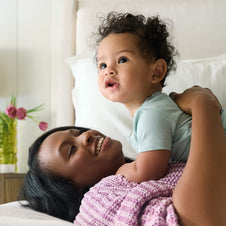
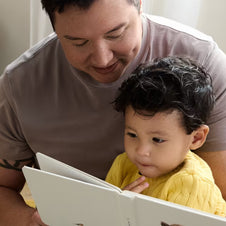
What is a FOMO baby? Does my baby have FOMO?
Here are signs that your baby might have FOMO (fear of missing out):
-
Your baby is very alert and busy.
-
Your baby tends to be curious.
-
Your baby is usually busy exploring and/or constantly moving.
-
Your baby protests sleep when people or activities are around them.
Babies with FOMO may also:
-
need more soothing before sleep
-
take longer to settle
-
require a darker environment to sleep
-
struggle to stay asleep while transitioning from the car seat to the crib
-
have less noticeable sleepy cues because of extra movement, noise, and energy
Could it be something other than FOMO?
Sometimes, babies and toddlers fight sleep for reasons other than FOMO. Parents are often shocked by how much easier sleep becomes when these issues are corrected.
Here are the most common things mistaken for FOMO:
-
Overtiredness
When little ones stay awake too long, they get a surge of cortisol (a stress hormone). This gives them a “second wind,” which makes falling asleep and staying asleep more difficult.
-
Developmental progression
When children learn new mental, physical, and/or emotional skills, it often feels fun and exciting. Sometimes, the new skills are so exciting that they want to practice them in their crib when it’s time for sleep.
-
Separation Anxiety
Peaks of separation anxiety can happen throughout early childhood, like when your baby learns object permanence, hits a new developmental milestone, or experiences a big life change. When a baby or toddler is going through separation anxiety, sleep can feel like a fight because they don’t want to miss out on time with you.
-
Inability to fall asleep on their own
If your baby has never learned how to fall asleep without being rocked, bounced, or fed to sleep, it may seem like they have FOMO. In actuality, once they learn how to fall asleep on their own, it takes the fight out of both bedtime and nap time. Need a step-by-step plan? I can help. Just select your child’s age, and I’ll show you how to do this in a developmentally-appropriate, emotionally-connected way.
Whether your baby or toddler is fighting sleep because they have FOMO or for another reason, my tips below can help.
Important Note: If you have a great little sleeper who suddenly is struggling with sleep, it’s always a good idea to rule out health concerns, like an ear infection or other illness. Having your pediatrician check those little ears or other symptoms can be so helpful if sleep is suddenly a battle.
How do you help a FOMO baby sleep at home?
-
Check your wake windows.
A wake window is simply how long your child is awake between naps or before bedtime. If your little one’s sleep is off, wake windows are the first thing to check. If they’re staying awake too long or not staying awake long enough, sleep can be a struggle.
-
Create a wind-down routine.
A simple, but soothing bedtime routine helps cue your little one's brain that sleep is coming. It sets the stage for rest and helps them transition from a busy environment to sleep time.
-
Create an environment for sleep success.
An environment free of distractions makes it easier for little ones with FOMO to sleep. You'll want the room to be dark, cool, and humming with the consistent noise of a sound machine. Try to move any fun toys and mobiles out of view of the crib. A space with minimal stimulation helps calm your baby and makes it easier to fall asleep and stay asleep.
-
Be Consistent.
FOMO babies tend to be excellent observers. They learn so quickly when and how things change around them. Being consistent with your routine and approach to sleep really is the key for babies who struggle with FOMO.
If you need help with sleep, my classes will give you a fully customizable plan to set your days and nights up for success while keeping you emotionally connected to your little one.
How do you help a FOMO baby nap on the go?
-
Aim for one good nap at home that day.
Naps on the go can often be a struggle for babies with FOMO. Getting in one solid nap at home in their familiar environment can help avoid overtiredness and allow for more flexibility when you’re out and about.
-
Be flexible with wake windows.
When you’re on the go, your little one is taking in much more stimulation and excitement. This often allows them to stay awake longer. I know this can cause parents to panic because they are trying to prevent overtiredness. In this moment, let that go. Watch your little one; if they are content, it’s okay that wake windows are longer than usual.
-
Minimize distractions when you can.
If they’re trying to nap in or stroller, do your best to move out of their line of sight. If you’re baby wearing, consider wearing a nursing cover. The hum of a sound machine can also block out surrounding noise that keeps FOMO babies awake and alert. Any way we can reduce stimulation will help increase the chance of a nap.
-
Keep moving.
Motion can help your little one fall asleep. It may not always be possible, but when you can, keep walking, keep that stroller going, or keep that car cruising. The rhythmic motion often helps them relax enough to fall asleep or stay asleep.
-
Manage expectations.
Understand that babies who struggle with FOMO probably aren’t going to be the best sleepers when you’re out and about. Naps are likely to be short, and that’s okay. Any amount of rest is enough to be helpful (even if it’s just 10-20 minutes). Babies and toddlers with FOMO are often content when they’re out on an adventure, but know this: babies and toddlers mirror you. If you are stressed, they will be too. If you can embrace the experience and try to go with the flow, it will be much more enjoyable for everyone.
If FOMO is always making sleep tricky, having a plan you can follow consistently will help. My classes will give you the tools you need to achieve restful and independent sleep while also allowing for flexibility when you need it.
Want to see how a mom handles a FOMO baby on the go?
This FOMO baby is a great sleeper while at home (they took this class). Watch how this mom and baby handle awake time and naps while at the zoo.